Separate depth from tone
First, decide how light you would like your hair to be. Dark brown, dark blonde and very light blonde differ in depth, but each can have warmer, cooler or more neutral tones. Saying you want a cool colour does not yet explain whether you mean a deep brown, an ash blonde or softly beige strands.
That distinction helps when browsing references. You may like the lightness of one hairstyle but prefer the tone of another. Explain that openly rather than selecting a photograph that only partly reflects what you want. Remember that screens and filters can considerably alter colour temperature and even how light or deep a shade appears.
Look at your skin in neutral light
Look at your face near a window in soft daylight. A strongly yellow lamp, a coloured wall or direct sunlight can make judging tones harder. To compare shades, move your hair away from your face and hold fabrics in different colours nearby. Notice which you feel good with and whether you like the relationship between your skin, eyes and the colour.
Popular tests based on vein colour or gold and silver jewellery are only pointers. They do not always give a clear answer. Skin can have mixed characteristics, look different after tanning and change in appearance with its surroundings. Redness does not automatically mean a cool complexion, and a temporary tan should not be the sole reason for a lasting hair colour change.
What can warm shades bring to your hair?
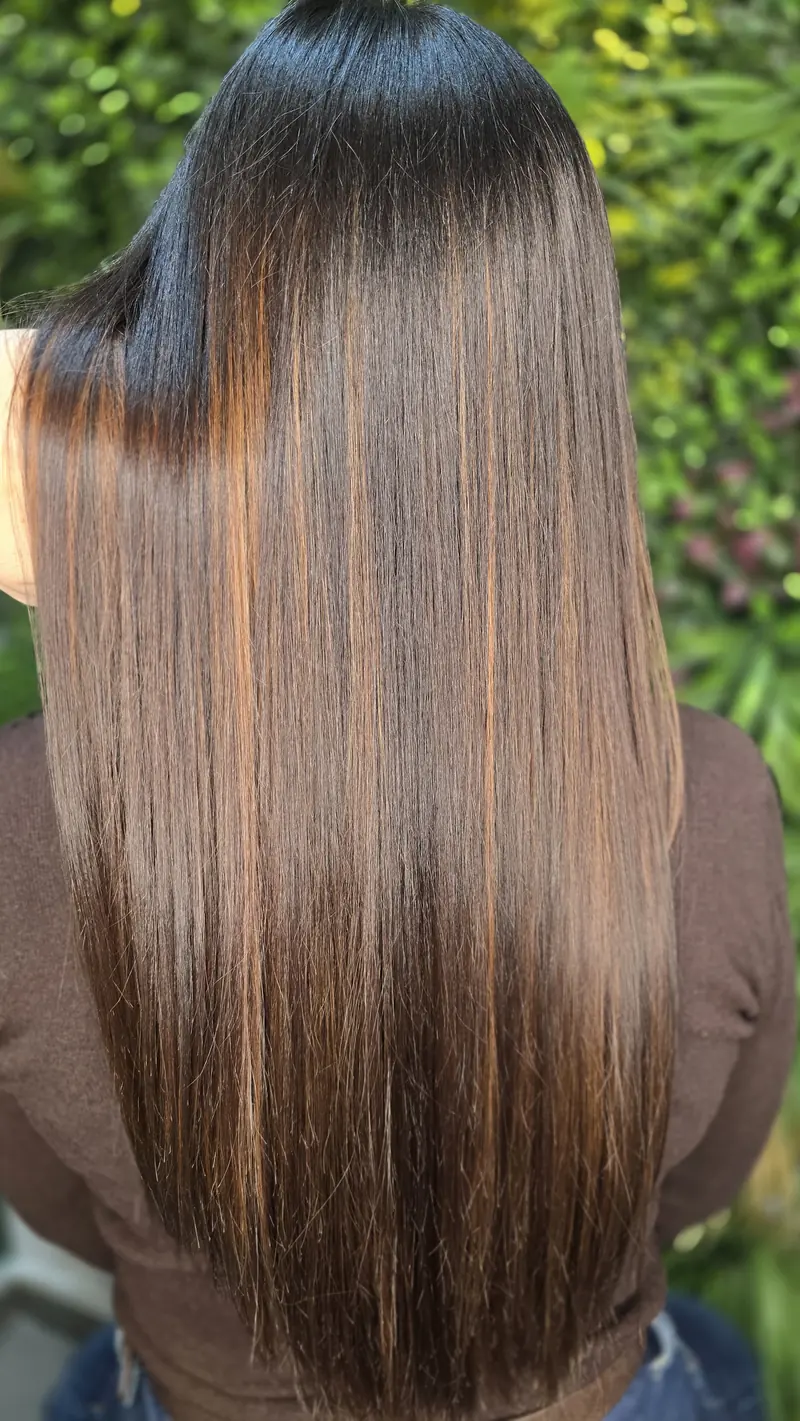
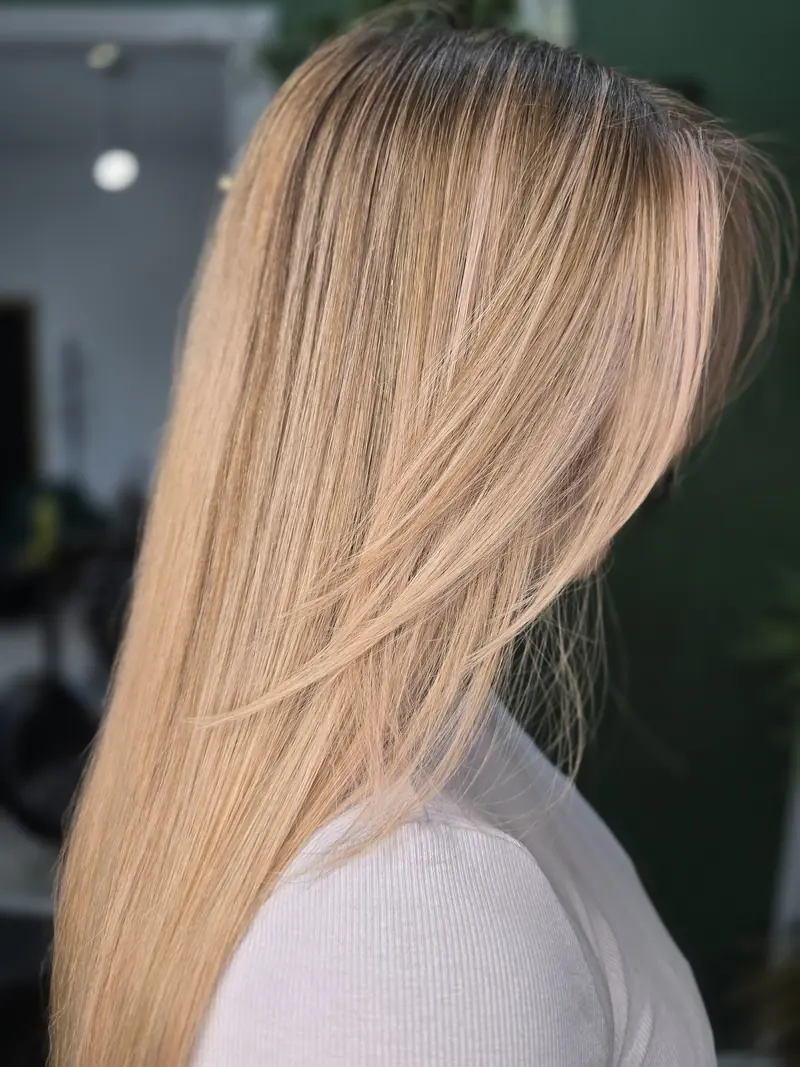
Honey, caramel, gold and copper highlights can add brightness and definition. Depending on depth and intensity, they can look delicate or bold. A warm colour does not have to be orange. Beige blonde may contain a little warmth, while chocolate brown with caramel strands can still look predominantly dark.
If these shades appeal to you, consider whether you want them throughout your hair, around your face or only through the lengths. A small accent distributes colour differently from an all-over shade. In Jowita's gallery, images 05 and 06 show the same hairstyle: dark hair with copper-caramel highlights. They do not establish which formula or type of smoothing treatment was used.
Cool shades and how much ash to choose
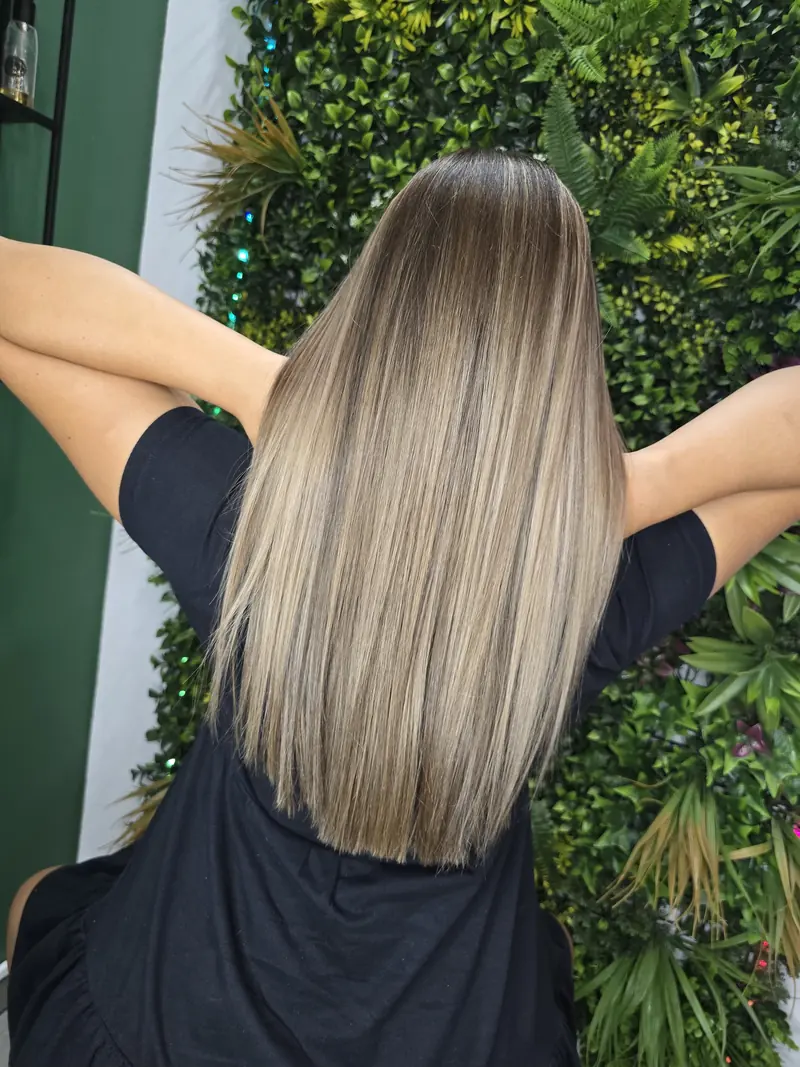
Ash, pearl and cool brown can create a softer, more muted impression. They may look harmonious with some combinations of skin tone and brows, or feel too severe with others. This is about proportion and preference, rather than a universal judgement about appearance. A very cool tone on very light hair can look different from the same colour direction on a deeper base.
Distinguish a deliberate ash finish from an unwanted grey cast caused by too much pigmented product. If you want a cool blonde, discuss how to maintain it as well. A warm reflection does not always mean something has gone wrong: lighting can reveal it, or the original tone may be fading. Any neutralising product used at home should suit your particular colour.
Neutral and beige shades as a middle ground
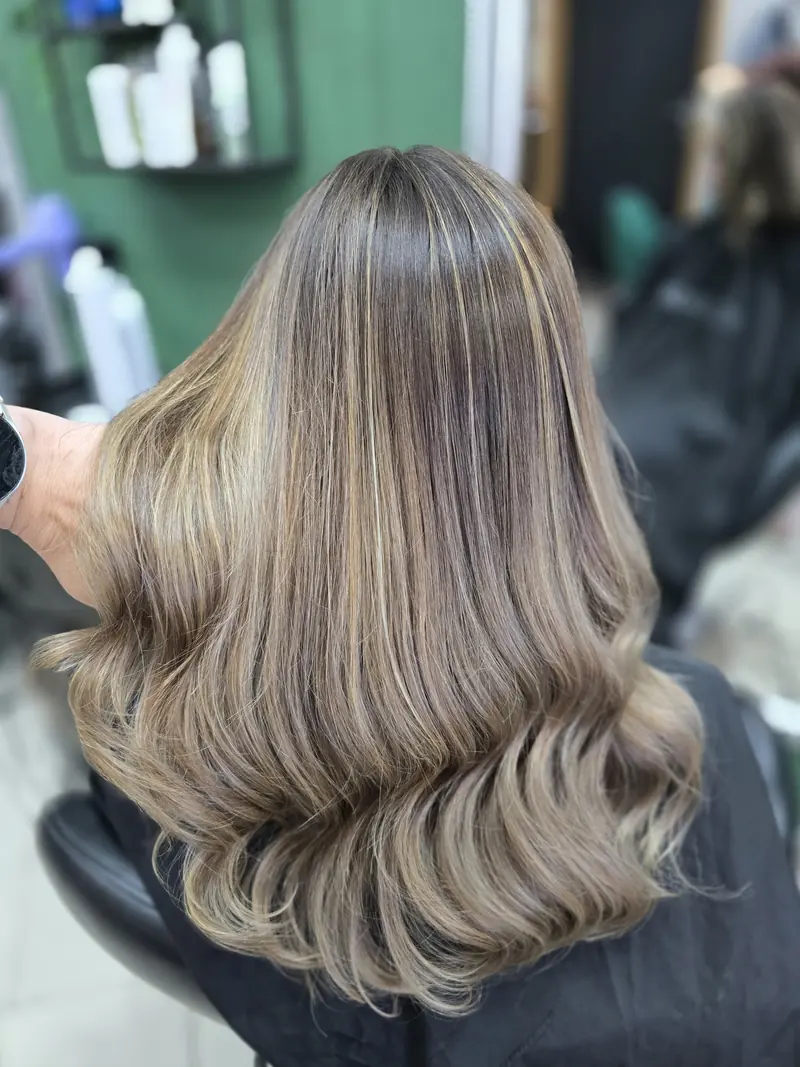
Neutral and beige shades can be useful options if you want neither strong gold nor obvious ash. They are not one fixed colour, though. Beige on dark blonde hair looks different from beige on very light lengths. The amount of natural base showing between the highlights also makes a difference.
Instead of searching for one picture of the perfect beige, compare several similar references. Point out which looks too grey, which too golden and which has the right lightness. That conversation clarifies expectations more effectively than shade names on dye packaging. A neutral root can also be paired with slightly warmer ends where that suits the intended overall look.
Think about contrast between your face, brows and hair
Tone is only part of the picture. The difference in depth between your skin, eyebrows, eyes and hair matters too. Very dark hair against fair skin creates a stronger contrast than a soft dark blonde. Lighter strands around the face can change the impression of the whole colour, even when most of the hair stays brown. Discuss placement as well as the shade itself.
Consider your everyday make-up and clothes. A colour you love in a fully styled photograph should also feel comfortable on an ordinary morning. You do not need to match your hair to one outfit, but it helps to consider whether the planned change fits how you want to look day to day.
What your hair can achieve matters as much as the reference
Choosing colour for your complexion should not overlook your hair's history. Very light, cool blonde may require lightening, with the extent depending on your natural base, previous dyes and the condition of your lengths. Going darker needs a plan too, particularly on unevenly lightened hair. It is not simply a matter of applying any brown shade.
Mention home colouring, henna, smoothing treatments and recent changes. If your ideal result is not sensible in one appointment, discuss a staged approach or a similar direction that involves less intervention. A good match considers both appearance and keeping the hair in a condition that is comfortable to wear and style.
Make a bigger change feel manageable
A change does not have to involve your whole head of hair. You can discuss highlights, a little brightness around the face or a tone adjustment. These options still need a hair assessment, but they offer different ways of planning the intensity of the result. If you are concerned about losing a natural look, explain which parts of your current colour you would like to keep.
Allow for timing when planning a substantial change. Having a new colour just before an important occasion leaves less time to get used to it or refine the plan if necessary. Agree on the appointment and a realistic result well in advance. Avoid experimenting with several dyes yourself between your consultation and the booked visit.
Look beyond the perfectly styled photograph
In a photograph, hair colour works alongside make-up, clothing, the background and image editing. Try separating those elements: do you like the shade itself, or the overall mood of the picture? That distinction matters when a reference features dramatic evening make-up you rarely wear. Equally, avoid judging your own hair only in a bathroom with a single warm light source.
It can help to look at your current hair while wearing a neutral-coloured top and using no phone filter. The aim is an honest colour comparison, rather than searching for flaws in your face. Note whether you want your new colour to feel softer, lighter or more expressive. If your tastes change, you do not have to stay within a colour category you were once given. Hair colour can support natural harmony or create deliberate contrast; the choice should feel like yours.
Bring three clear preferences to your consultation
Write down how light you like your hair, which tones you do not want and how often you can return for a refresh. Add a daylight photograph of your own hair and a few references with a similar length. If you cannot name the colour, describe how it looks to you: too yellow, too dark or not bright enough around the face. You do not need salon terminology to explain your expectations clearly.
Jowita Litwin specialises in blonde hair and has run her salon in Goleniów since 2019. Call 663 304 091 to start a conversation about your colour. Studio Fryzur – Jowita Litwin is at ul. Szczecińska 3/4. The photographs on this website help illustrate a direction, but the final plan needs an assessment of your own hair.
Before your visit
Does fair skin mean I should choose a cool blonde?
No. How light your skin is does not automatically determine its undertone or your preferences. Compare different shades around your face, considering your brows, contrast and how they look in daylight.
Can I get exactly the colour in a photograph?
A photograph is a reference. Your result depends on your starting colour, previous treatments and hair condition, while lighting and camera settings also change how a photograph looks. Agree on a direction and what is realistically possible.
Should my hair colour match my eyebrows?
It helps to look at hair and brows together, but they do not have to be identical. You can choose a stronger or softer contrast. What matters most is that the overall result feels right for you.