Balayage: lightness placed through individual strands
Balayage places lighter sections in different areas of the hair. They may be fine and plentiful or broader, giving the shape stronger definition. Their position matters: around the face, on the surface, beneath the top layers or towards the ends. This gives the colour dimension and changes how it looks as the hair moves.
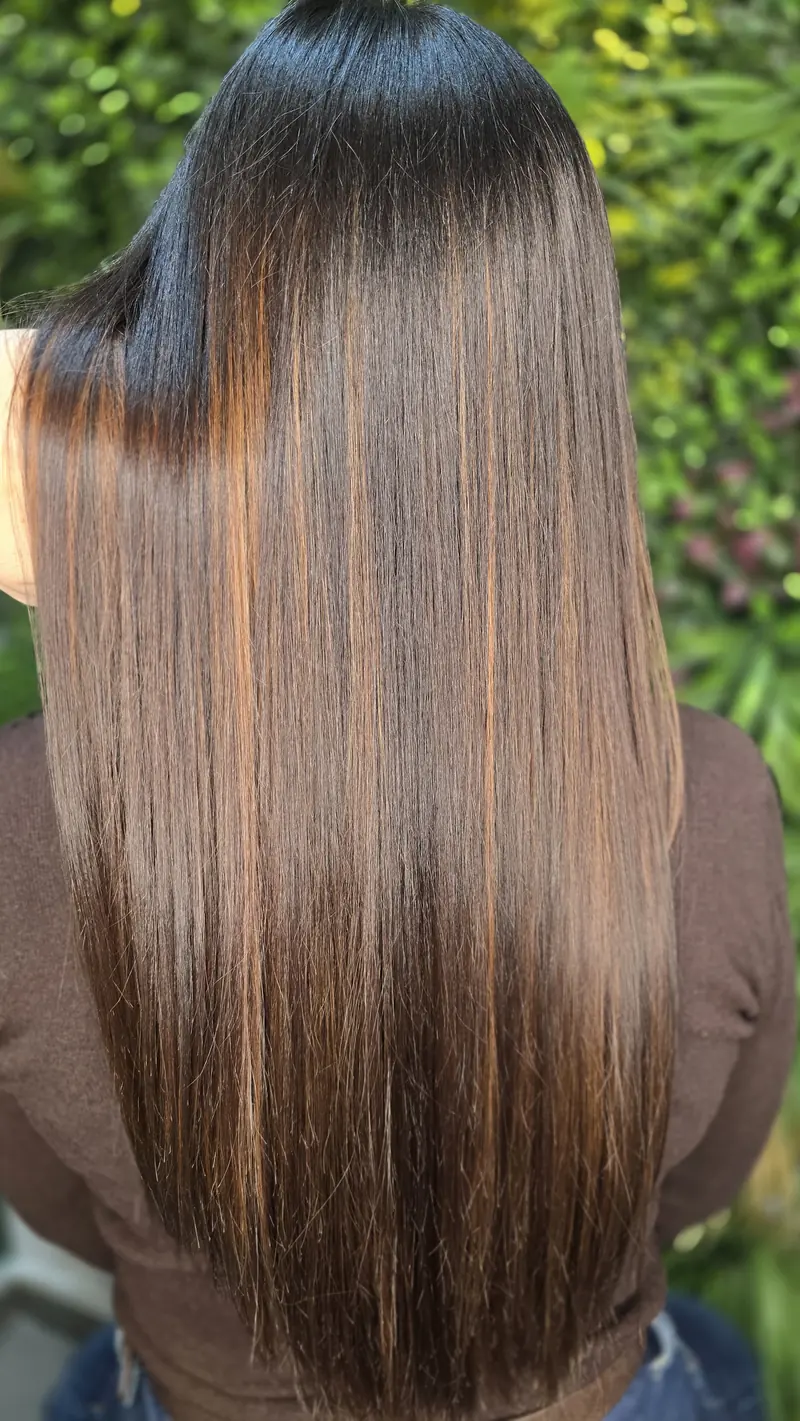
In practice, balayage describes a range of approaches and finishes. It does not always mean one application method or a fixed level of contrast. Two people can ask for balayage and choose very different results: subtle beige highlights through dark blonde hair, or distinct light strands against a brown base. Bring a photograph and explain exactly what you like about it.
Ombre: a more noticeable change towards the ends
With ombre, the main feature is the transition from a darker upper section to lighter ends. The difference between roots and ends is usually more noticeable than in a very subtle sombre. A well-planned result does not need a harsh horizontal line; the blend can be soft even where the colour contrast is clear.
Discuss how far down the lighter section should begin and how much darker colour you want to keep. The same arrangement looks different on shoulder-length hair and hair reaching the shoulder blades. Shorter hair leaves less room for a gradual transition. If you are planning a substantial trim, discuss it alongside your colour so the lighter ends are not cut off straight away.
Sombre: a gentler contrast
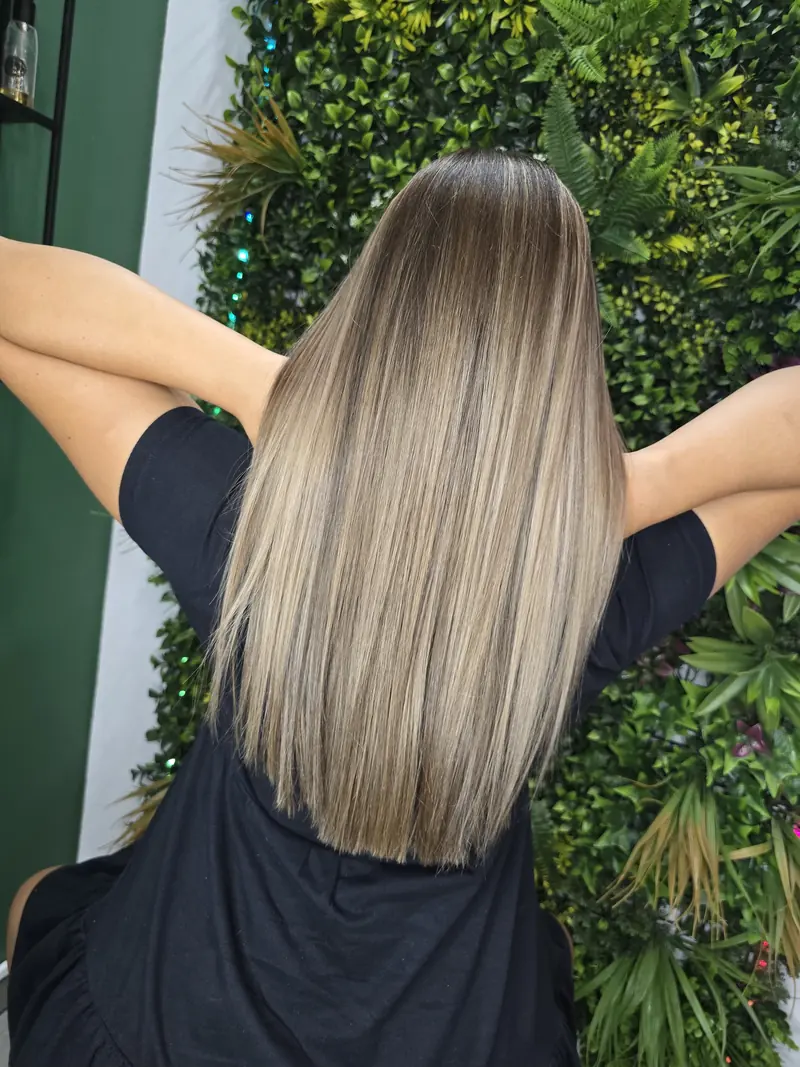
Sombre is associated with a subtle transition between the base colour and lighter lengths. The contrast is usually softer, and the lightness may blend into strands that begin higher up. The aim can be a gently sunlit effect, without a strong divide between a dark top section and light ends.
Subtle does not mean effortless to create or automatically quick to achieve. Producing a soft finish on an uneven, previously coloured base can require careful planning. Sombre does not have to be very light blonde. It can work within brown, caramel or dark blonde shades, provided their relationship creates the intended gentle blend.
Compare contrast, placement and roots
Three questions make these looks easier to compare. First, should the lightness run through individual strands or sit mainly towards the ends? Second, how much contrast do you want between the base and the ends? Third, should the roots stay natural, be shaded darker or also become lighter? Your answers are more useful than a fashionable name on its own.
The boundaries between these names are flexible. One colour service may combine balayage highlights, a gentle sombre transition and a root shadow. Those elements can work together. The overall composition determines the result; there is no need to fit it under a single label. Explain what you do not want as well, whether that is strong face-framing highlights, very light ends or an obvious line of regrowth.
Your starting colour affects what is possible
Your natural colour, previous colouring and the condition of the lengths shape the lightening plan. Hair coloured dark for a long time may respond differently from natural dark blonde hair. A photograph of cool beige hair does not reveal the starting colour or how many appointments it took. It is a point of reference, rather than a promise of an identical result.
Mention home dyes, henna, lightening and smoothing treatments, even if they were done some time ago. On long hair, traces of earlier treatments can remain in the ends. A strand test may help assess how the hair responds, but your hairdresser decides whether one is needed and what it should involve. In some cases, making the change in stages is the more sensible approach.
Length and styling change how colour looks
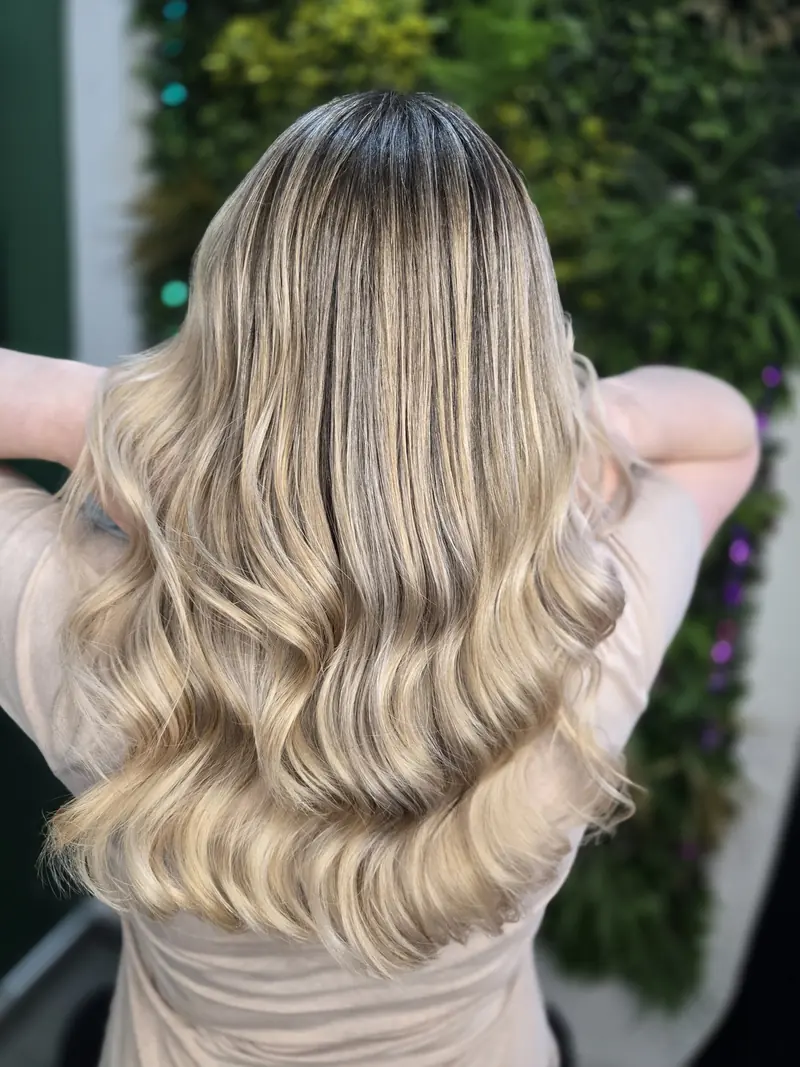
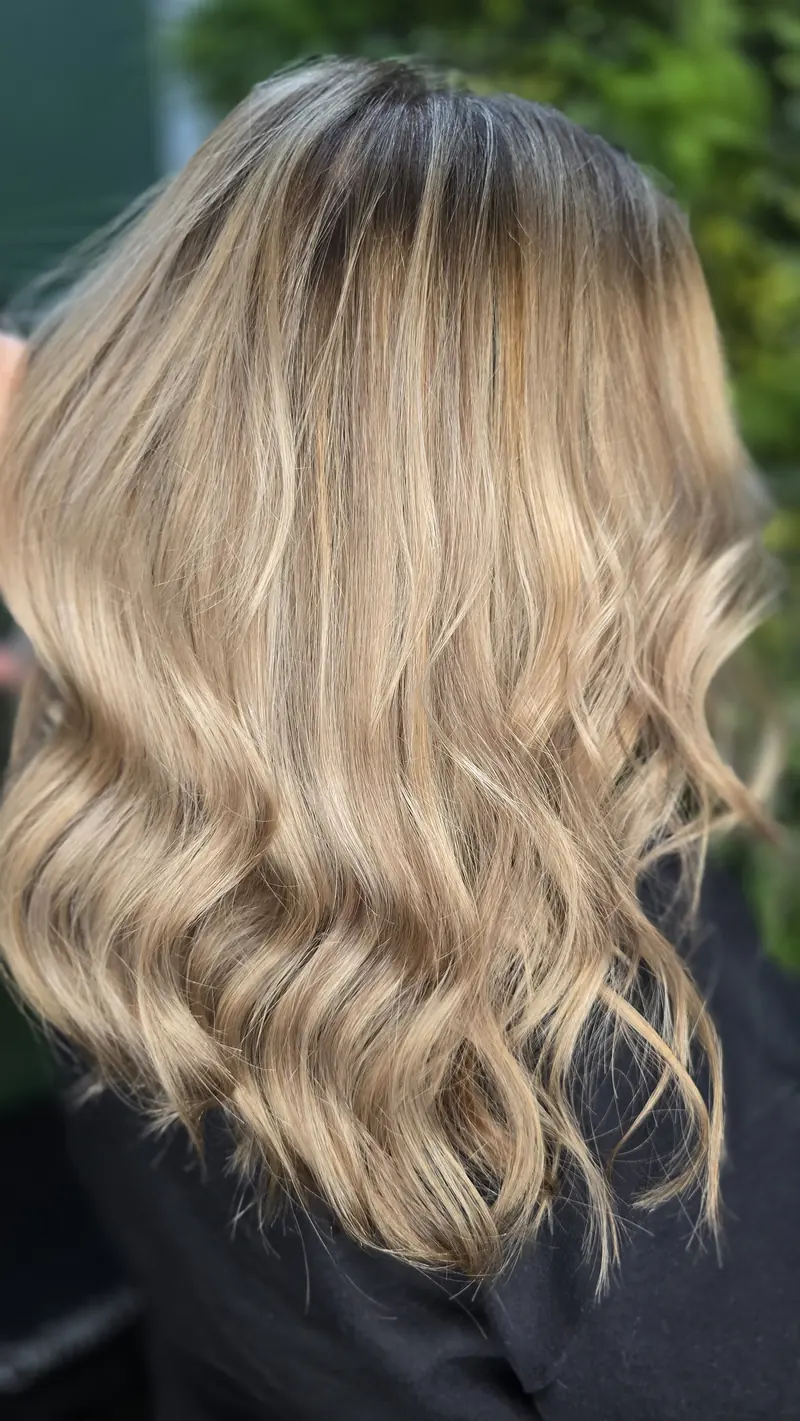
On wavy hair, light and dark sections form visible ribbons. Straight hair shows the blend differently and can make the placement more apparent. If you do not normally curl your hair, discuss how your reference would look worn straight. Imagine the colour with your usual parting, tied back and seen in natural light.
The cut changes the proportions too. Layers reveal strands from beneath the surface, a fringe draws attention to the face, and a blunt bob emphasises the line of the ends. Your colour plan should work with that shape. Jowita's gallery includes both long waves and short bobs, making it easier to compare different ways of wearing lighter strands.
Regrowth and colour refresh appointments
Keeping the roots closer to your natural colour can make new growth less obvious. It does not mean the colour will stay unchanged. Lighter lengths may gradually lose their original tone, while the balance between the dark top and light ends shifts as your hair grows. When to refresh depends on your expectations, growth and the chosen placement.
Distinguish between a fuller lightening appointment and a smaller tone refresh. Each visit does not necessarily need to repeat the whole process. During your consultation, ask how the colour may look after a few months and which elements are likely to need attention first. If you prefer less frequent visits, say so before choosing a strong contrast.
Look after the lightened sections
Any of these looks may involve lightening, so your care routine needs to reflect the condition of your hair. Choose shampoo primarily for your scalp and conditioner for your lengths. Gentle detangling, heat protection and moderate styling temperatures matter more than the number of products in your bathroom.
Use a pigmented product only when it suits the shade you want. Warm caramel does not need to be neutralised into ash. If your colour fades unevenly, avoid trying to correct it yourself with several different toners. Show your hair in daylight and explain your current routine. That gives a clearer starting point for a refresh than a series of improvised experiments.
Booking the right kind of appointment
When booking, explain whether this will be a new colour effect or a refresh. If your hair already has lighter strands, say when they were done and which areas you want to change. Refreshing a few highlights, changing their overall placement and correcting uneven colour may require different plans. Describing your hair as shoulder-length helps, but also mention its thickness and previous colouring.
Do not choose a service solely because it has the shortest estimated duration or the lowest example price. Check whether your discussion includes toning, styling and a possible haircut. Do not assume all those elements are included in every service name. Confirming the details beforehand helps allow the right appointment and clarify the complete plan. If you do not know what your reference is called, simply describe the result you would like.
Choose references that explain your preferences
Choose two or three pictures showing a similar base colour and length to yours. Add a sentence to each: you like the soft roots, want brightness around the face or want to keep some brown. Include an example with too much contrast. Screens can alter both brightness and colour temperature, so specific descriptions help avoid misunderstandings.
To discuss balayage in Goleniów, contact Studio Fryzur – Jowita Litwin at ul. Szczecińska 3/4. Call 663 304 091 to agree on the right service and arrange an appointment. Gallery images 13 and 14 show two views of the same hairstyle: beige waves with darker roots, rather than a before-and-after comparison.
Before your visit
Does balayage have to be blonde?
No. Lighter strands can also be planned within brown and caramel shades. Their relationship to the base and the condition of the hair matter more than achieving very light ends.
Is sombre easier to maintain than ombre?
A softer contrast may look more discreet as it grows out, but maintenance also depends on the roots, shade and care routine. There is no single rule for every colour described by these names.
Can balayage be combined with a root shadow?
Yes. The terms describe different elements of the result: balayage refers to the placement of lighter strands, while a root shadow softly darkens the roots. Whether and how to combine them needs to be assessed for your hair.