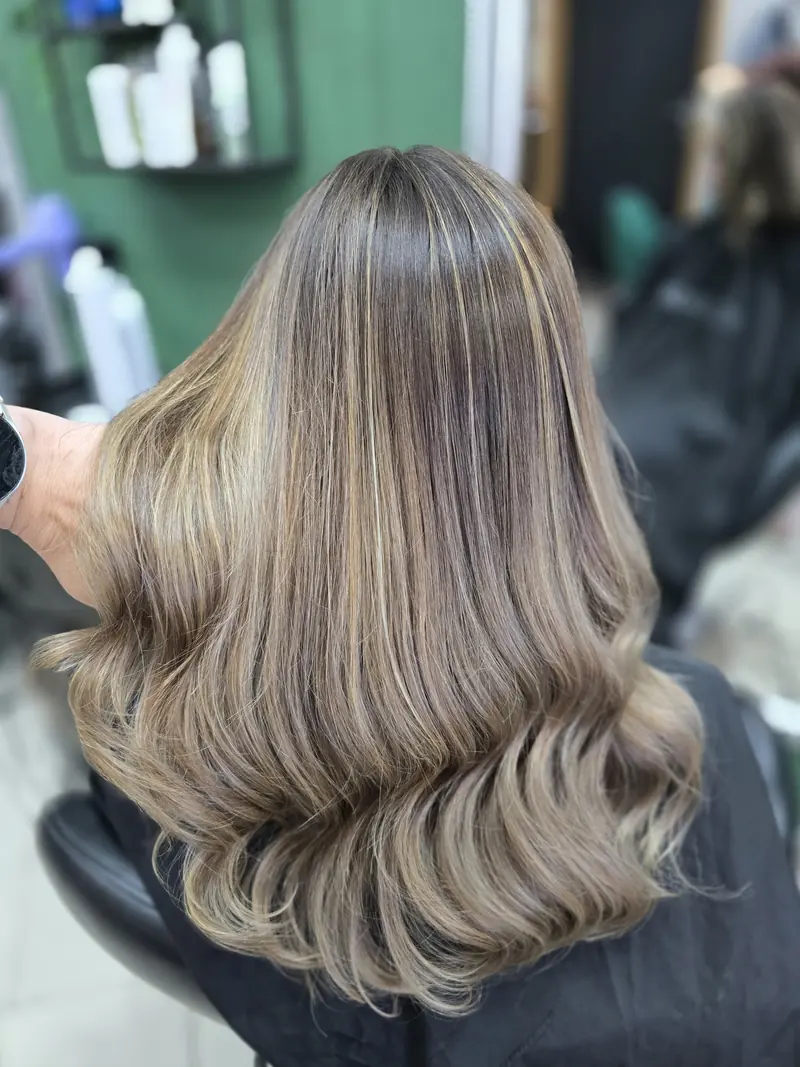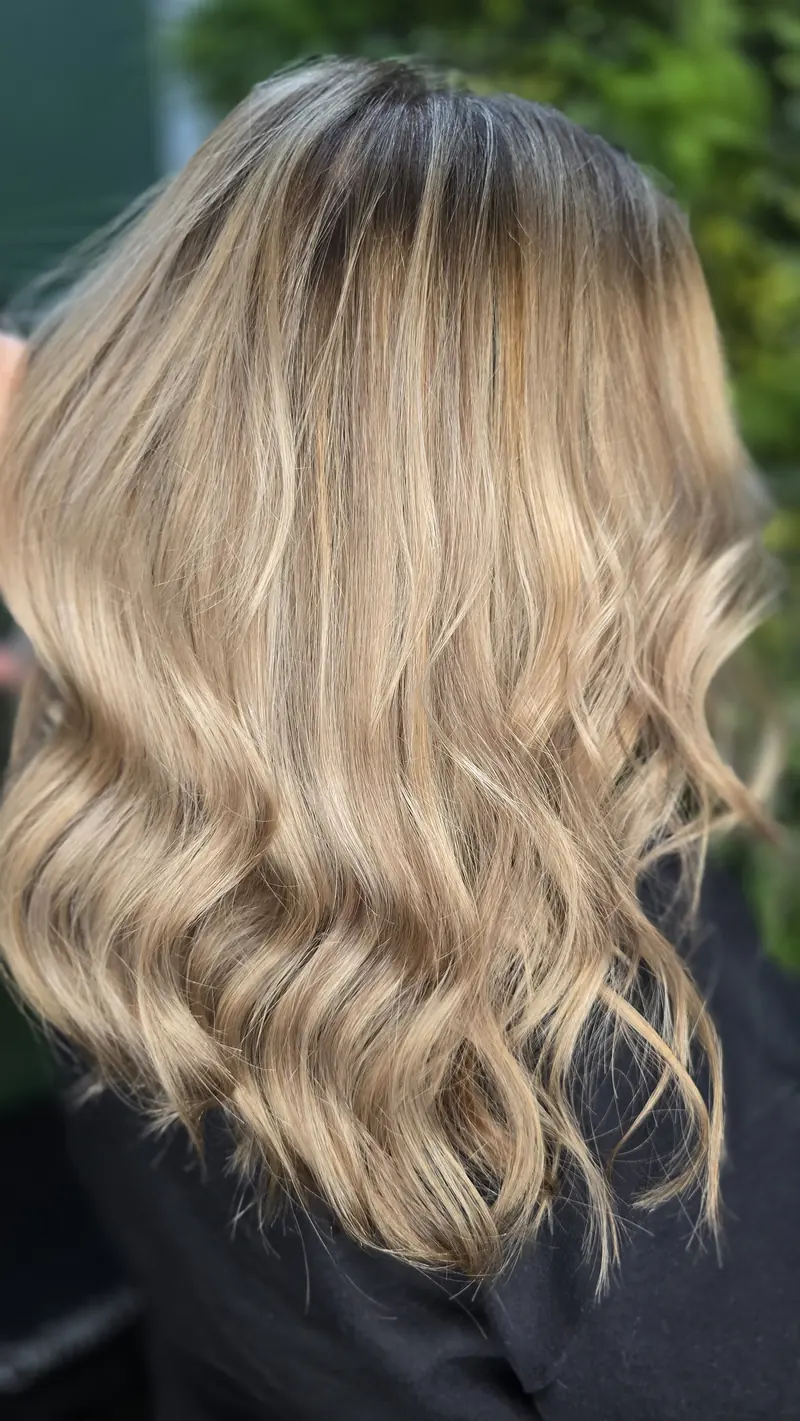
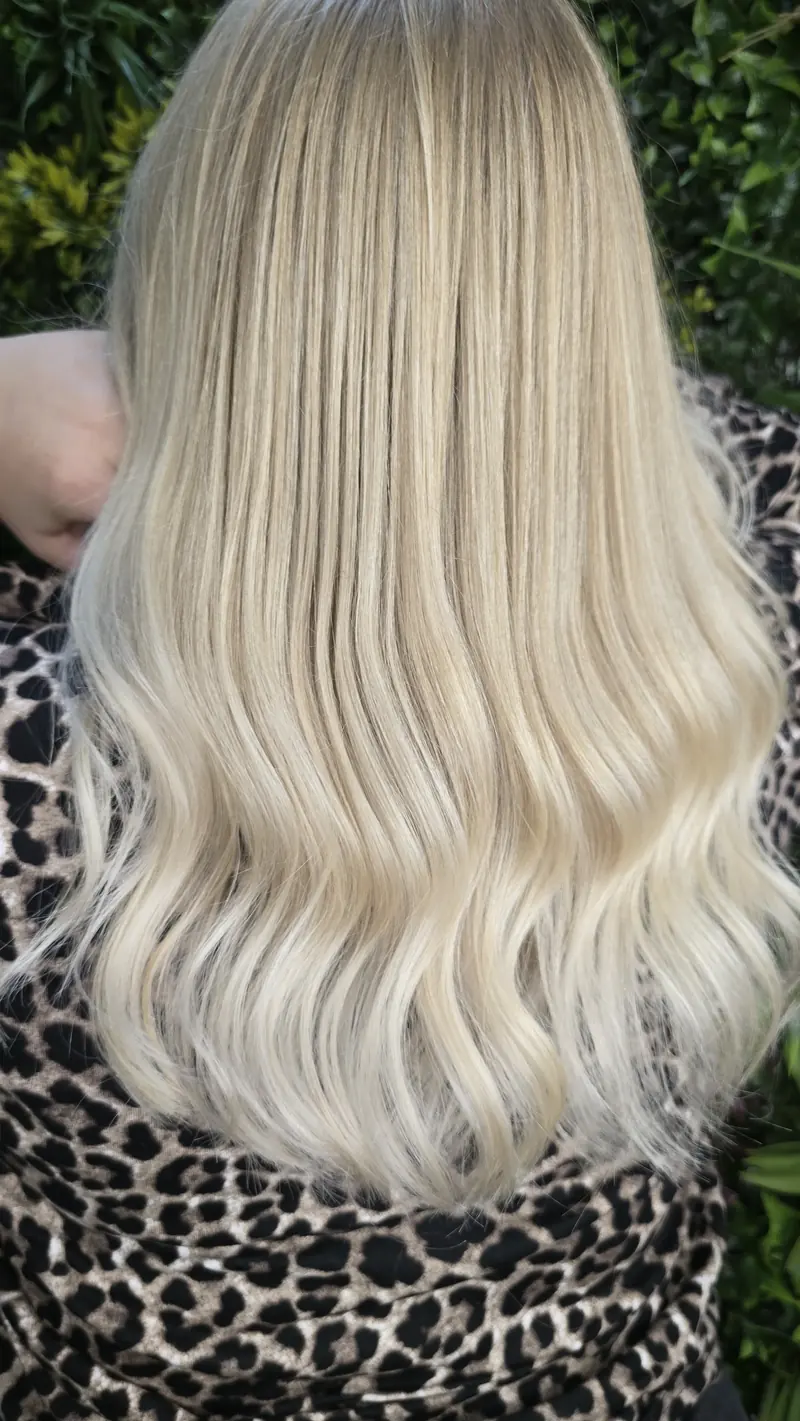
Start with how your hair feels and behaves
Lightened lengths may behave differently from your natural roots. Notice whether your ends tangle after washing, your hair dries unevenly, or it feels rough or weighed down. Colour alone cannot tell you which care routine to choose: very light, fine hair and thicker beige blonde hair may need different amounts of conditioner. Think about your scalp separately, too, rather than expecting one product to meet every need.
Keep your routine simple for a few washes and note what you notice. If you change your shampoo, mask, oil and drying technique at the same time, it is hard to tell what helps. The aim is hair that is easier to detangle, feels supple and is comfortable to wear, rather than fitting neatly into an online hair category.
Cleanse your scalp and be gentle with your lengths
Wash as often as your scalp and activity levels require. You do not need to put up with hair that feels unwashed just to protect your colour. Wet your hair thoroughly, work shampoo over the scalp and massage with your fingertips rather than scratching with your nails. The lather running through your hair as you rinse is usually enough to cleanse the lengths gently; hair with a lot of product build-up may need more thorough washing.
Use comfortably lukewarm water and rinse products out carefully. Hot water does not improve the care your hair receives. After washing, squeeze excess water out with a towel rather than rubbing in different directions. Rubbing can easily tangle lightened ends and leave you pulling at them unnecessarily when you detangle.
Condition after washing; use a mask when needed
Apply conditioner mainly through the lengths and ends, unless the manufacturer recommends otherwise. Distribute it evenly rather than coating only the top layer. Start with a small amount: too much can weigh fine hair down and leave it short of volume. Check the recommended processing time on the packaging, because leaving a product on longer is not always better.
A hair mask can complement your routine, but you do not have to use one every time you wash. If your hair feels heavy or difficult to style afterwards, use less or apply it less often. If the lengths still feel rough, first review how you apply products and dry your hair. Adding more products without noticing their effect cannot replace a routine that suits you.
Purple shampoo is not an everyday requirement
Products containing purple pigment can make yellow tones look less noticeable. They do not lighten roots or replace a colour appointment. Very light, porous areas may absorb more pigment, leaving a grey or violet cast. Follow the instructions, check your colour in daylight and do not extend the recommended processing time yourself.
Honey blonde is meant to have warmth, while beige blonde may combine warm and cool tones. Trying to remove every golden reflection can work against the intended result. If you are unsure whether you need a pigmented product, show your current shade at your consultation. Uneven or distinctly orange colour calls for a different approach from a little warmth appearing at lighter ends.
Keep heat under control
Gently detangle your hair before drying and use heat protection as directed. A heat protectant does not make any temperature safe to use. Keep the hairdryer moving, avoid holding the hot nozzle against one section and choose moderate settings. If your brush meets resistance, stop pulling and separate the tangle first.
Use straighteners or curling tongs on completely dry hair unless the appliance is specifically designed for another use. Avoid going over the same section repeatedly. If you need intensive smoothing every day, discuss your cut, drying technique or a simpler way of styling. An easier routine often does more for blonde hair than another product applied to overheated ends.
Small habits that help prevent tangles
Start detangling at the ends and gradually work upwards. Hold the section above a knot and choose a brush or comb that does not pull. At night, avoid fastening a tight hair tie in the same place. Shoulder-length and longer hair can rub against scarves, collars and bag straps, so pay attention to those repeated points of friction.
At the pool or on holiday, protect your hair from prolonged exposure to sun and water, and rinse it thoroughly after swimming. A hat offers a simple physical barrier against the sun. If you plan to swim soon after a colour appointment, ask for guidance specific to your service. Avoid homemade lightening mixtures with lemon or other improvised ways of changing the shade.
Does your blonde need toning or lightening?
Refreshing a tone and making hair lighter are two different aims. If you still like the lightness of your lengths and only the shade has changed, ask about toning. If you want more light strands or a different placement of contrast, a fuller colour service may be needed. There is no single appointment interval that works for every blonde.
Balayage with softly blended roots can be easier to maintain than an even blonde from root to tip, but it still needs care and occasional refreshing. Timing depends on growth, the chosen look, hair condition and your expectations. At your consultation, discuss both a full colour appointment and any smaller refresh that might suit you between bigger changes.
Build a routine you can keep up
Begin with a cleanser suited to your scalp, a conditioner for your lengths and heat protection if you blow-dry or heat-style your hair. Then consider whether you need a mask, a pigmented product or a leave-in treatment. Introduce one thing at a time. Notice how your hair feels once dry and at the next wash, rather than judging only by how slippery it feels while wet.
If your ends are breaking or the condition of your lengths has suddenly worsened, stop experimenting at home and arrange to have your hair assessed. An irritated, painful or unhealthy scalp needs appropriate medical advice. Salon haircare supports the appearance and comfort of your hair; it cannot diagnose the cause of symptoms.
Caring for blonde hair when travelling or exercising
A change of routine does not have to mean neglecting your hair. Pack familiar products in clearly labelled containers rather than trying several new ones at once. If your scalp needs washing after exercise, wash it and make time to condition the lengths. Dry shampoo can have its place, but it does not replace normal washing or remove all styling residue.
Remember a brush, a gentle hair tie and a hat for the sun when packing. When there is no time for a full blow-dry, a simple style may be a better choice than rushing very hot straighteners over damp hair. Avoid trying to correct holiday warmth in your colour with an unfamiliar product picked up in a shop. Afterwards, show your hair in normal light and mention swimming, sun exposure and the products you used. This helps inform a conversation about refreshing your colour.
Bring your routine and questions to your appointment
Before speaking to your hairdresser, take pictures of the products you actually use. Explain how often you wash your hair, how you dry it and what you find most difficult. This makes it easier to discuss a realistic routine instead of choosing care from a colour photograph alone. You can also show a blonde you like in the gallery and explain whether its lightness, cool tone or softly blended roots appeal to you.
If you are looking for a hair salon in Goleniów, Studio Fryzur – Jowita Litwin is at ul. Szczecińska 3/4. Call 663 304 091 to discuss an appointment and the right service for your hair. The booking feature on this website is a demonstration; real appointments are confirmed by phone.
Before your visit
Should I use purple shampoo every time I wash?
Not automatically. Frequency depends on your shade, hair porosity and the product instructions. If a grey cast appears or your colour loses its intended warmth, reduce the pigment and ask for advice on your routine.
Can a hair mask repair split ends?
A product may temporarily improve smoothness and make detangling easier, but it cannot permanently join a split end back together. Discuss how much needs trimming and reduce the habits that contribute to damage.
Does every blonde need lightening again?
No. If the lightness is still right, a tone refresh may be enough. The service should follow an assessment of your hair and the result you want, rather than simply the time since your last appointment.